Astrology can sound like a list of twelve personality types. A birth chart is much more interesting than that: it is a conversation between different parts of a person.
You do not need to memorize the whole chart to begin. Start with the shared language of the elements, the way each sign moves through its modality, and then the question each planet brings to the table.
The elements: what kind of energy is this?
Fire, earth, air, and water are the four elements. They describe a quality of experience, not a complete personality. Each element appears in three signs, and those signs do different things with it.
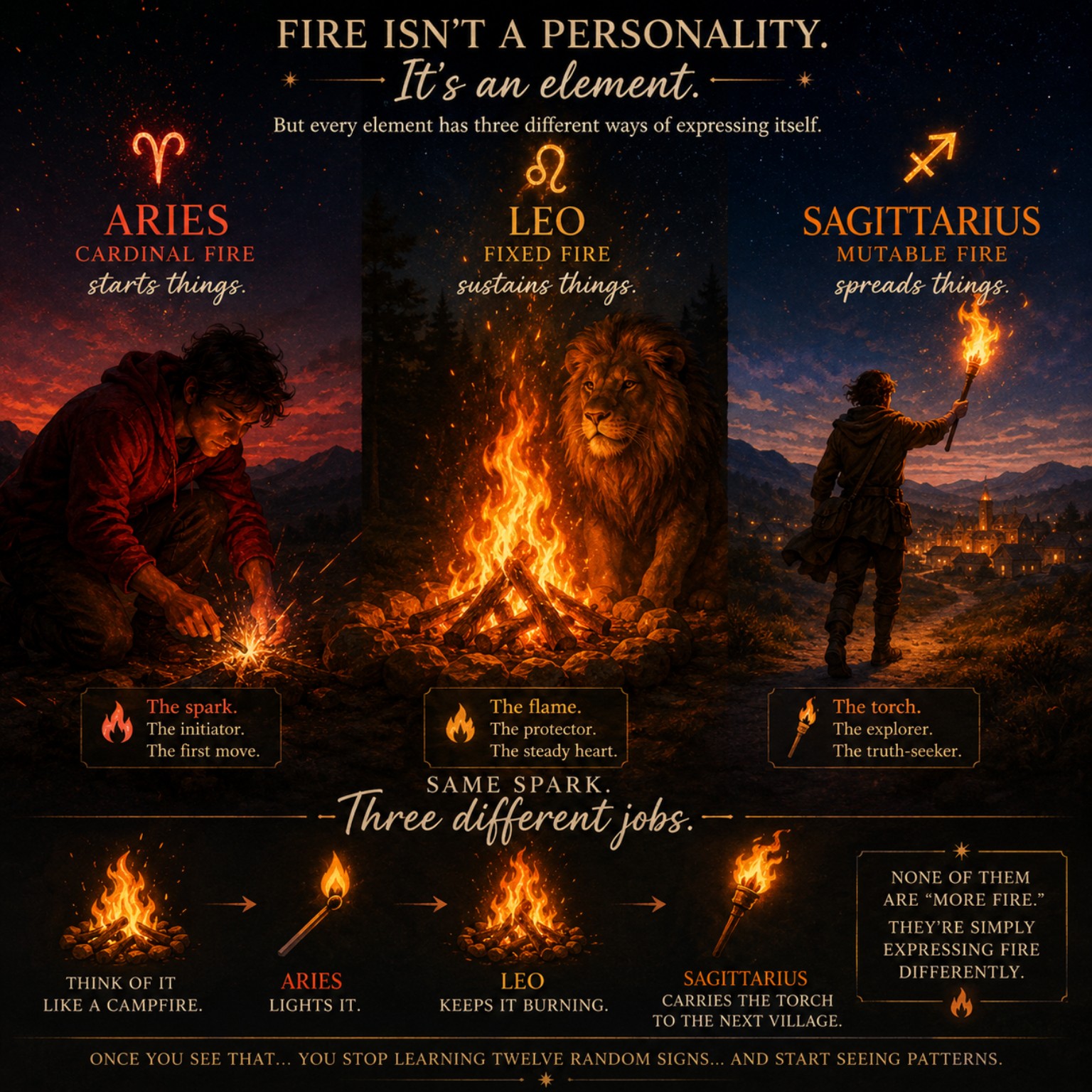
Fire
Aries · Leo · Sagittarius
What moves us?
A campfire: the spark, the steady flame, and the torch carried onward.
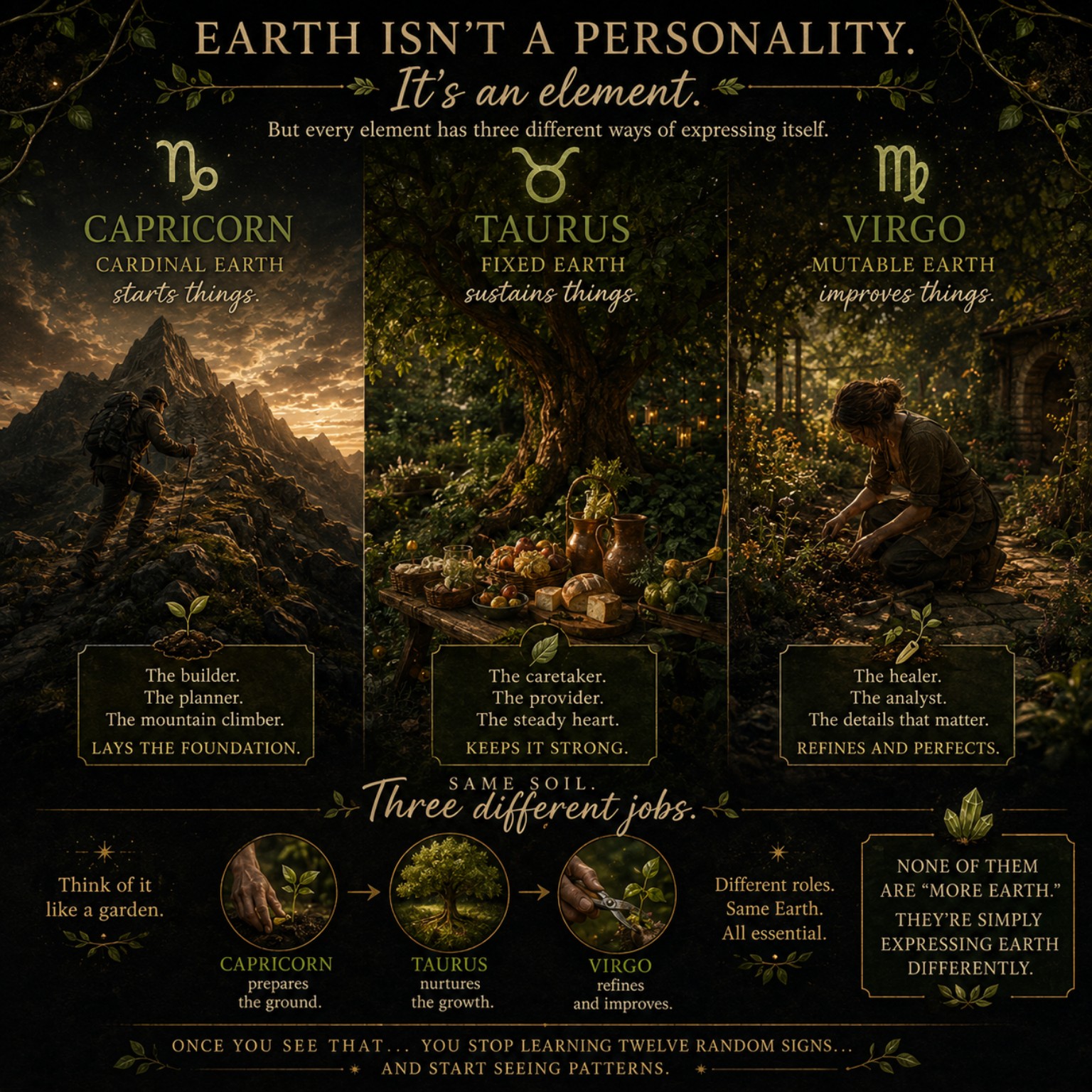
Earth
Taurus · Virgo · Capricorn
What can we make real?
A garden: preparing the ground, tending what grows, and adjusting what needs care.
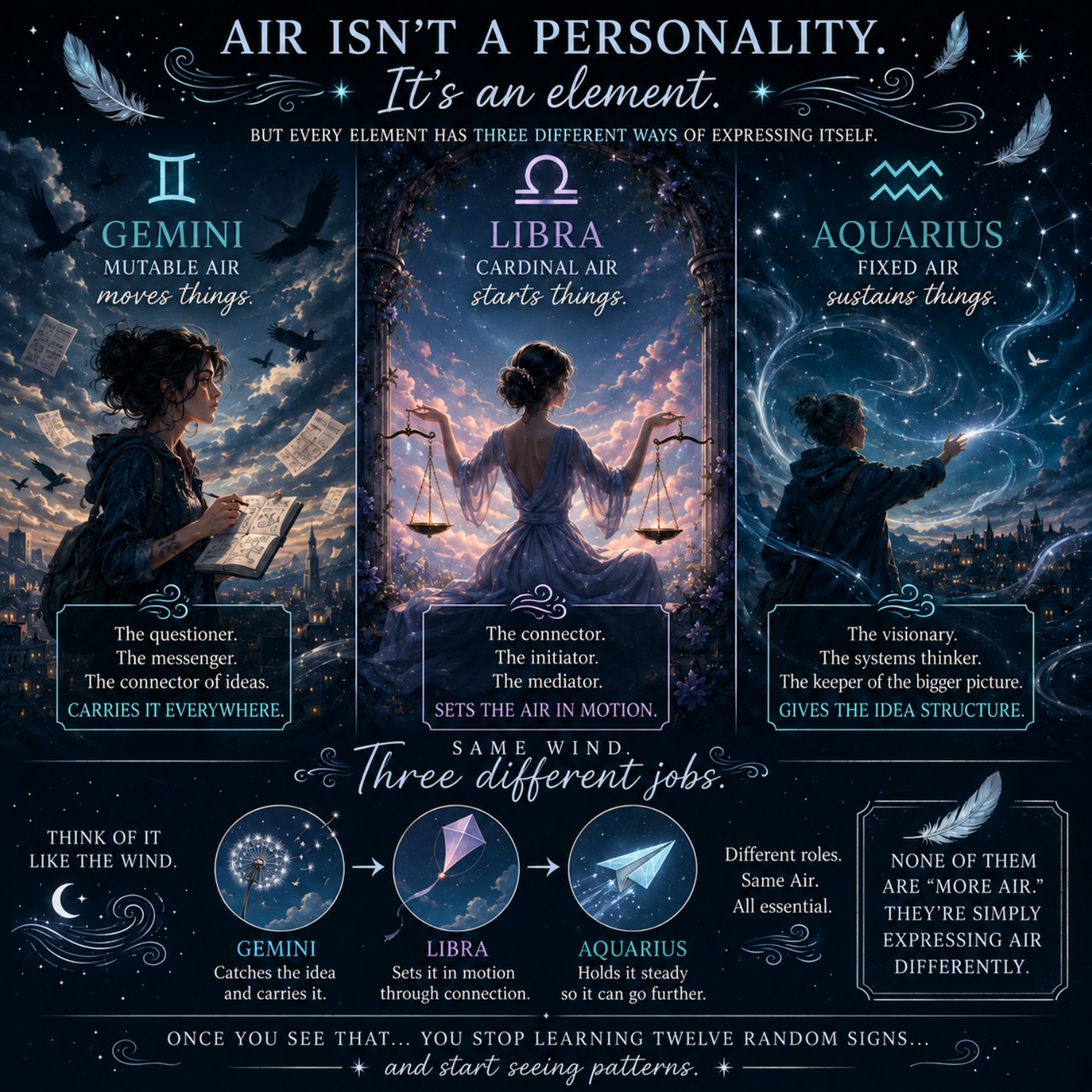
Air
Gemini · Libra · Aquarius
What can we understand and share?
Ideas moving between people: a question, a conversation, a perspective carried forward.
Water
Cancer · Scorpio · Pisces
What do we feel and protect?
Water in motion: gathering, holding depth, and finding a new way to flow.
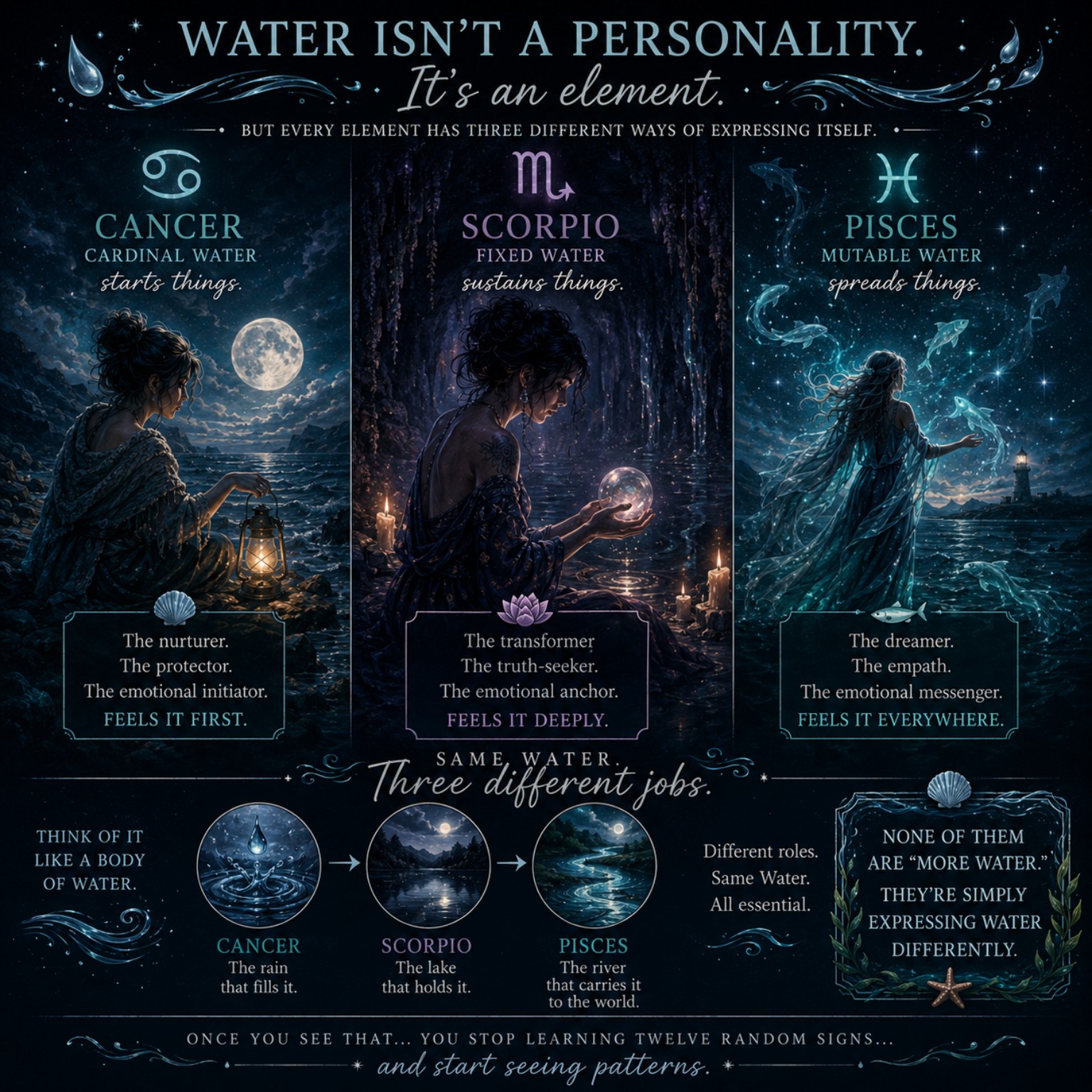
You can be deeply emotional without having your entire chart in water. You can have fire in your chart without being loud. The element gives us a starting vocabulary, not a verdict about you.
The modalities: what does the energy do?
Every sign has one of three modalities. Think of them as different jobs in the same unfolding story.
Cardinal
Begins
Aries · Cancer · Libra · Capricorn
Fixed
Sustains
Taurus · Leo · Scorpio · Aquarius
Mutable
Adapts
Gemini · Virgo · Sagittarius · Pisces
Put fire and modality together. Aries is cardinal fire: the spark that starts something. Leo is fixed fire: the flame that stays lit. Sagittarius is mutable fire: the torch that carries a story somewhere new. All three are fire, but they are not interchangeable.
The signs: element and modality in conversation
Each of the twelve signs combines one element with one modality. Its symbol can help you remember how that combination behaves. The ram moves forward; the lion tends a steady presence. The crab carries a protective shell and meets changing tides: Cancer is cardinal water.
Some symbols invite a second look. Aquarius is the water bearer, yet Aquarius is fixed air. The image of carrying and pouring can help us think about ideas being held and shared; it does not make Aquarius a water sign.
Rather than asking, “What kind of person is this sign?” try asking, “What is this element trying to do in this way?”
How the chart starts talking
A sign is only one part of a placement. A simple way into the conversation is:
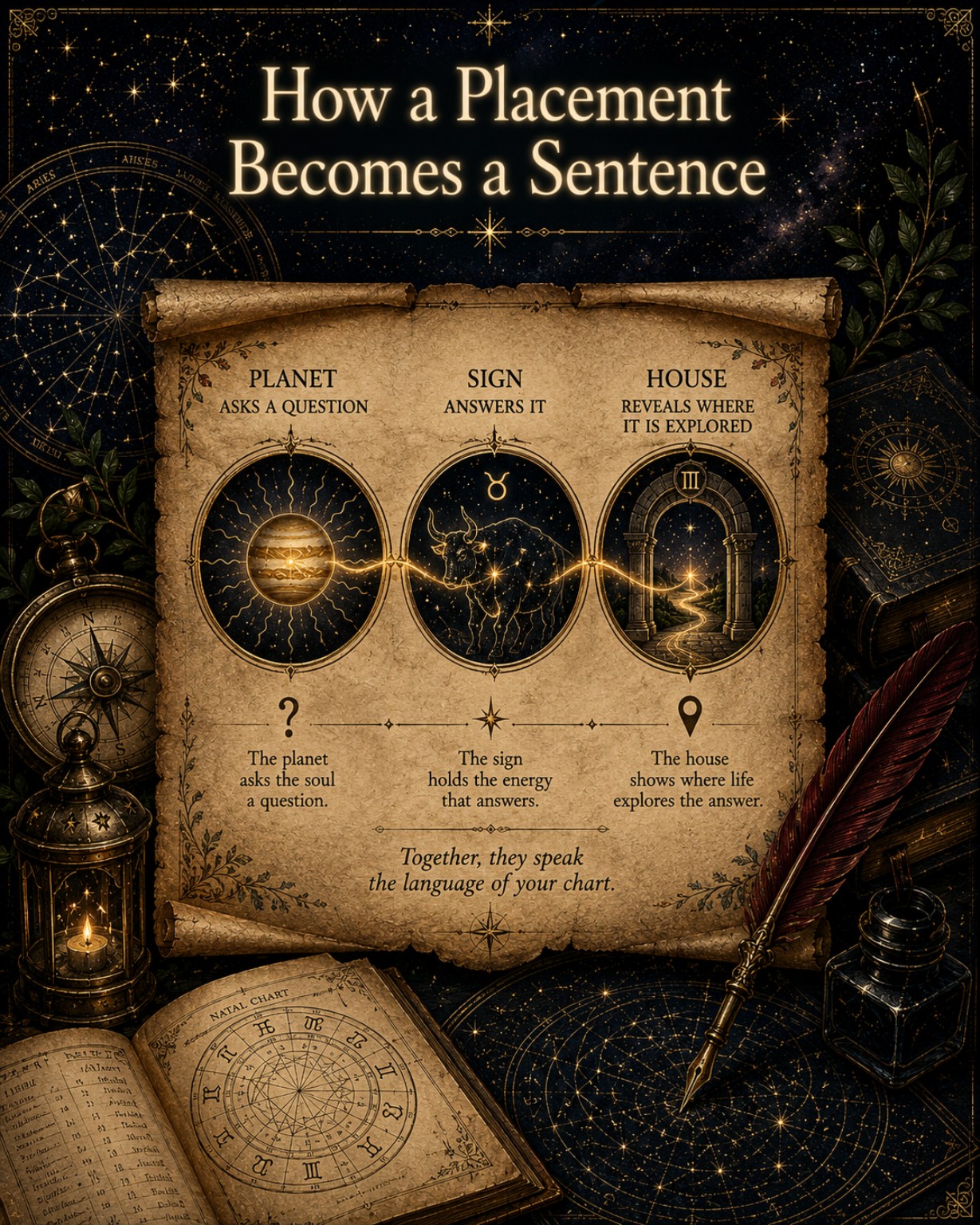
For example, the Moon may ask, “What helps me feel emotionally safe?” A Moon in Cancer and a Moon in Sagittarius might answer that question differently. The house adds the part of life where that conversation may be especially visible. Then every other placement joins in. That is why two people with the same Sun sign can have very different charts and very different lives.
Each chart has the same cast of planets and questions, but no two conversations are exactly alike. Your own experience belongs in the reading too.
How we use astrology at Stone & Sky
Stone & Sky can work with the Sidereal zodiac using the Lahiri ayanamsa or the Tropical zodiac. When you begin your Journey, you can choose Sidereal, choose Tropical, or ask Stone & Sky to choose the framework that seems most useful for your map. We use Whole Sign Houses with either zodiac system.
Those choices affect how a chart is calculated and organized. They do not change the heart of this guide: elements, modalities, signs, planets, and houses help us ask better questions about the person living the life.
We use astrology as a reflective language, not a prediction or a diagnosis. The chart is a map. Your life is the landscape. The Human Translation Method is how we keep the person—not the placement—as the authority.
When you are ready to put the pieces together, the Waypoint offers a smaller starting map, the Compass translates the whole chart, and an Astrological Trail Guide follows one question in depth.
KEEP EXPLORING
Follow the question that came up for you.
The Map Key has more plain-language answers about chart symbolism and the life behind it.
EXPLORE THE MAP KEY →